 CERESChemical Emergency Response E-Service
Product sheet
Run it well. Keep everyone safe. Be able to show it.
A plant's emergency team is judged on the days nobody hears about: the alarm that was real, the plume that stayed inside the fence, the neighbor who was told before they smelled anything. CERES Live Facility turns the detectors and met stations you already own into alarms that mean something, a plume that follows the wind, and a record that shows the plant did its job.
- Alarms that mean something, from the detectors and met stations you already own
- The plume from the readings, with the units, muster points and neighbors inside each zone
- The neighbors and the fire brigade told first, and a history that shows the plant did its job
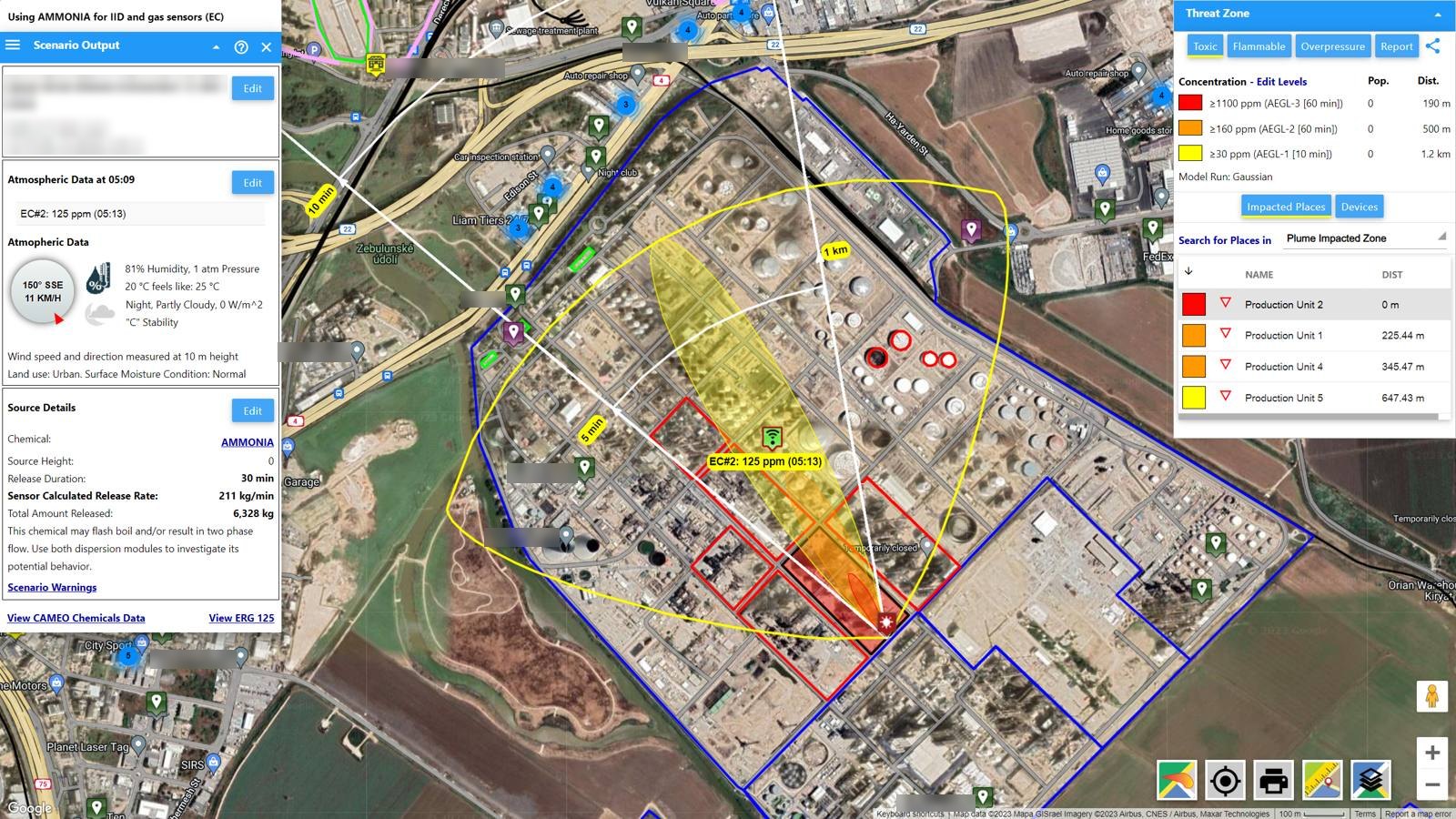
Six moments at a plant
Written from the control room's and the brigade's side. What CERES does comes second, in each one.
An ordinary shift
Most days nothing happens, and that is the job: every detector reporting, every met station in range, every screen showing the same site.
Fixed, area, personal and vehicle-mounted detectors and met stations on one map, with one-minute averages and offline detection per device. A wall display for the control room, digital signage across the site, and a readiness board across every site.
The alarm
A reading crosses a limit at two in the morning. The operator has seconds to decide whether it is a leak, a drifting sensor or a truck going by, and the whole shift acts on that call.
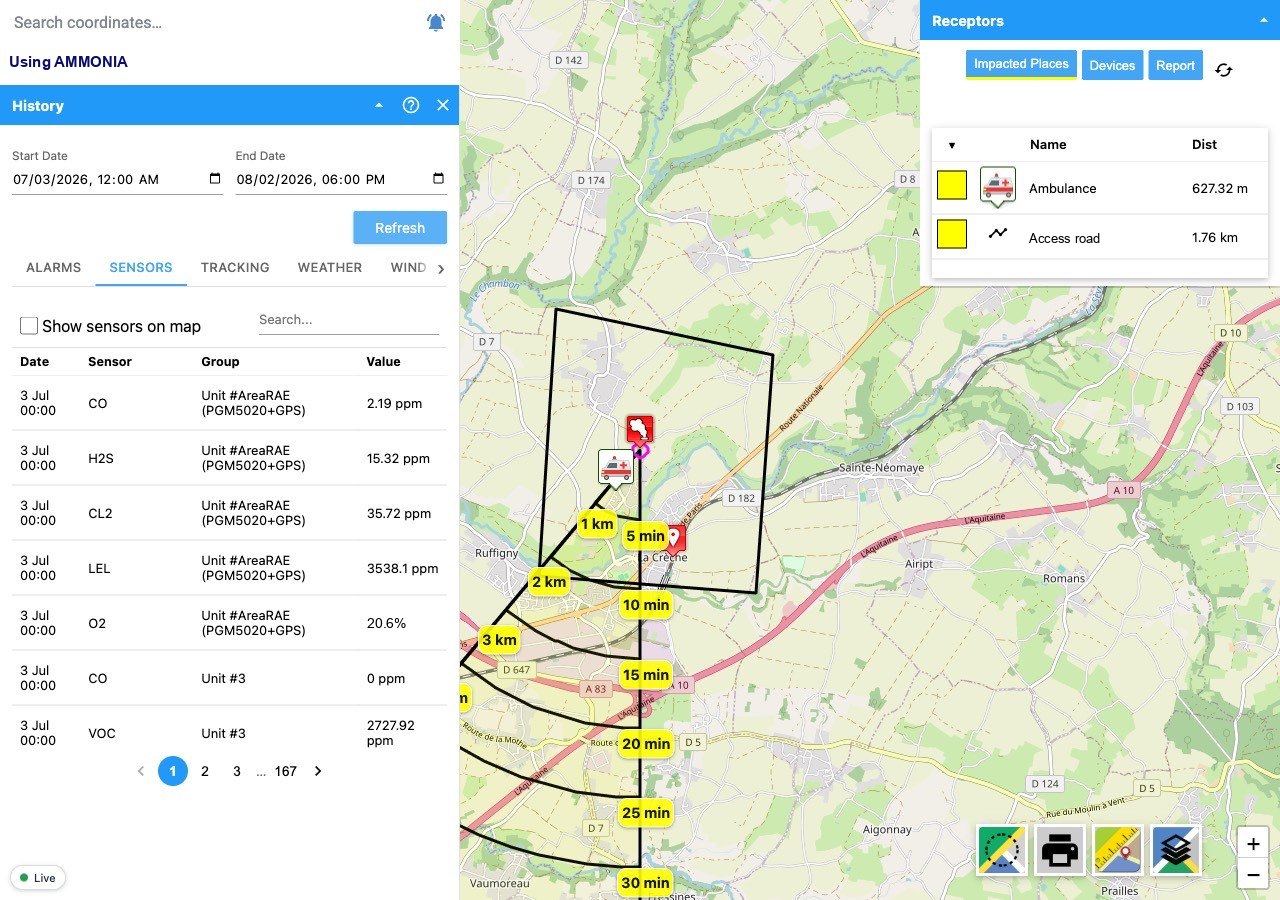
Alarm levels per detector and per chemical, from AEGL, ERPG, IDLH and LEL fractions or your own limits; on screen, audible, by email and SMS. Acknowledge, shield and record the disposition of every alarm. Weather, lightning and air-quality alerts.
Where is it going
The wind is doing what it wants, the release rate is unknown, and the brigade needs to know which units to clear and where to stage.
Quick Response draws the live wind corridor before the chemical or the rate is known. The sensor-driven plume lets the readings set the release rate and refreshes as they report. Locate Source works back from the pattern across the detectors to the likely origin.
Your people first
Operators, contractors and visitors are spread across the site. Before anything else, you need to know that everyone is out of the zone and at a muster point.
Head counting with geofences and muster points; the status board with PAR roll calls for the site and for an incident; the roster with QR join; GPS while responding; the Command Board for the plant fire brigade; incident chat with @mentions and push.
The neighbors, told first
The fence line is not the edge of the problem. The fire department, the LEPC and the families across the road should hear it from you, with a map, before they smell anything.
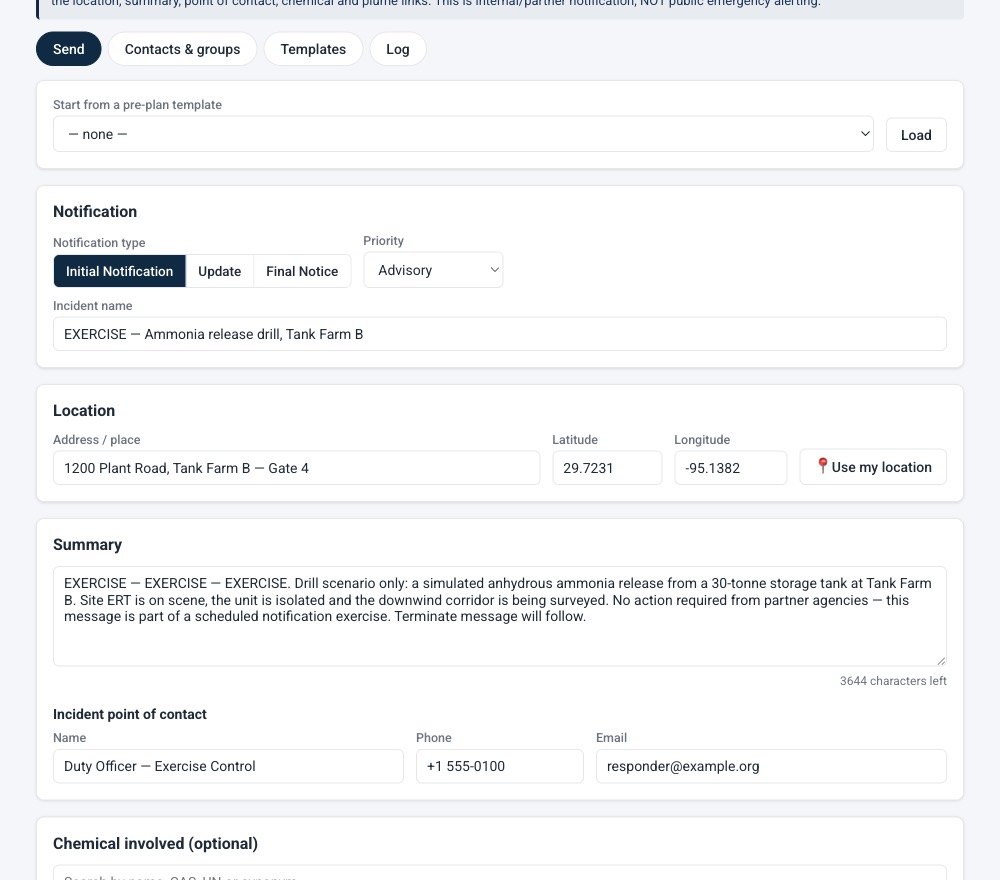
Call-down notification by email and SMS from pre-plan templates, with the plume link and a delivery log, and voice-call notification. Share links that the fire department, mutual-aid partners and the LEPC open without an account. CAP alerts for warning systems.
The review, and the next drill
Afterwards the questions come from the review, the regulator and your own team: what was known, when, and what was done about it. The honest answers are the ones written down at the time.
History for detectors, weather, alarms and tracking, on the map or exported; wind rose; interval reports; Tier II summaries; the incident record with tasks, log, costs and eight FEMA ICS forms. Training missions and lessons for the brigade and the control room.
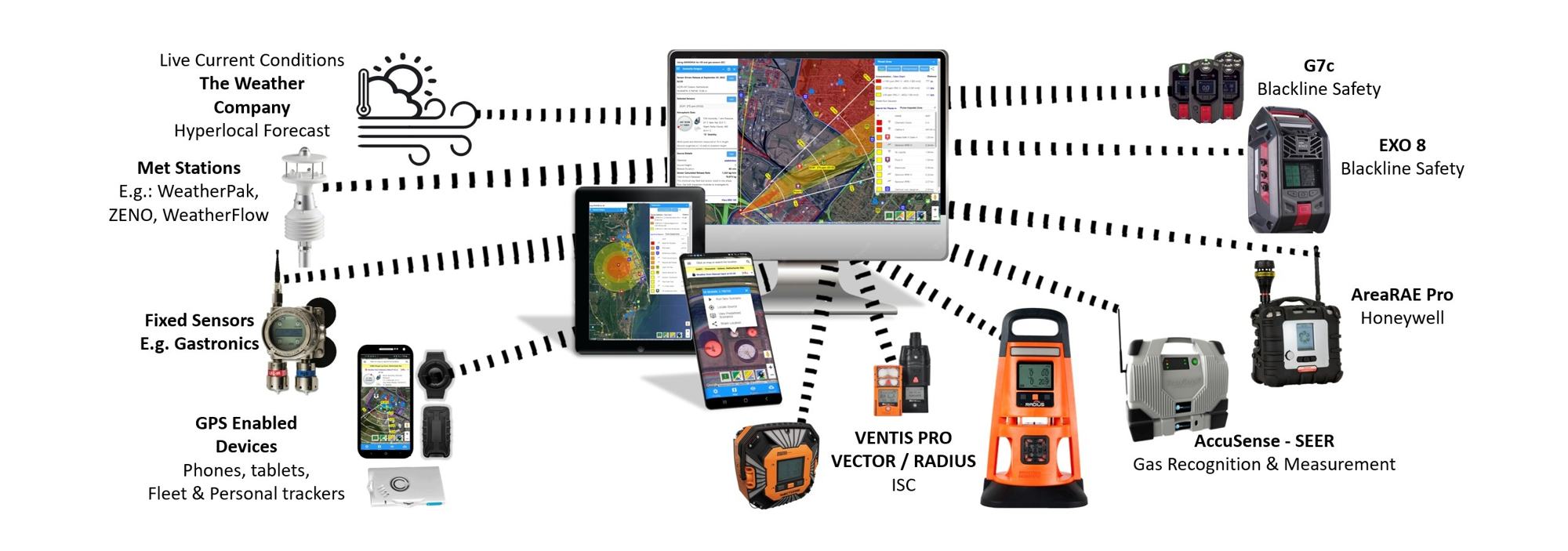
Specifications
- Detector interfaces
- Modbus RTU, TCP and ASCII; OPC; OSIsoft/AVEVA PI (Web API, database, AWS bucket); MQTT; serial and NMEA; PostgreSQL and web APIs; Blackline Live for G7c and G7 EXO; Honeywell and RAE through ProRAE Guardian and Safety Suite; Industrial Scientific iNet; AccuSense; Squishy Robotics drone-dropped sensors; manual readings from the field.
- Met stations
- Airmar, Zeno, WeatherPak, WeatherFlow Tempest and WeatherSTEM natively; Campbell, Vaisala and others over Modbus, PI or serial; The Weather Company conditions and forecasts as the online source or fallback; configurable averaging window per station.
- Sensor types
- Electrochemical, PID and VOC, LEL, oxygen and gamma channels; concentration and percent shown side by side; LEL basis per manufacturer (methane or pentane) handled by the detector correction tool.
- Data acquisition
- CERES DAQ software on a site PC or server polls the devices and pushes to the service; one-minute averaging; offline detection per device; vendor clouds read directly. Simulators for Modbus, PI Web API, Blackline Live and Safety Suite for commissioning without live instruments.
- Alarms
- Per-sensor and per-chemical levels; on screen, audible, email and SMS; acknowledge, shield and disposition with history; weather and lightning alarms; alert feeds from NWS, AirNow and OpenAQ; responder emergency alarm from the phone app.
- Models from readings
- Sensor-driven plume and locate source. Quick Response live wind corridor and upwind odor corridor with the monitoring plan. All ALOHA sources and the Pro fire, explosion, boilover, battery and radiological models are available for planning; see the hazard models sheet.
- Planning
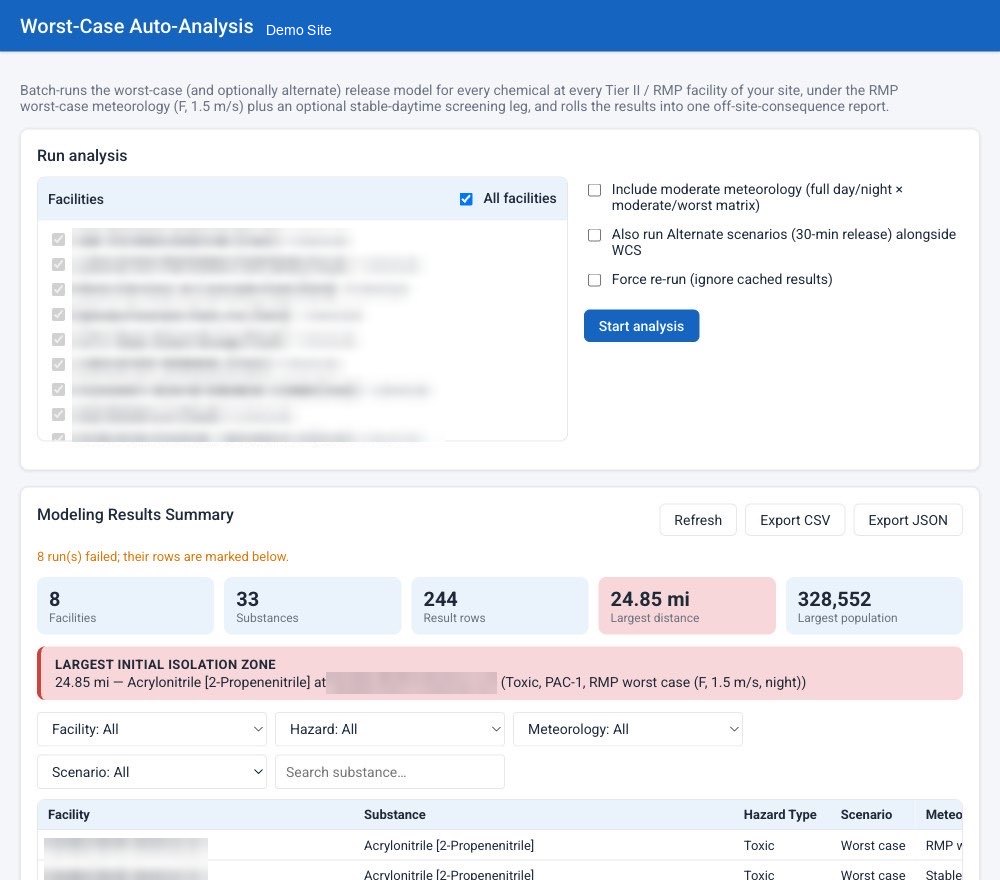
- Predefined scenarios for every unit, tank and rail spot, run in two clicks with the weather of the moment; worst-case auto-analysis of every Tier II or RMP chemical with distances and population; threat at a point for control rooms, muster points and the fence line; a sensor placement study for new detectors, enabled on request; PRV sizing (NFPA 58, API 521).
- Facility data
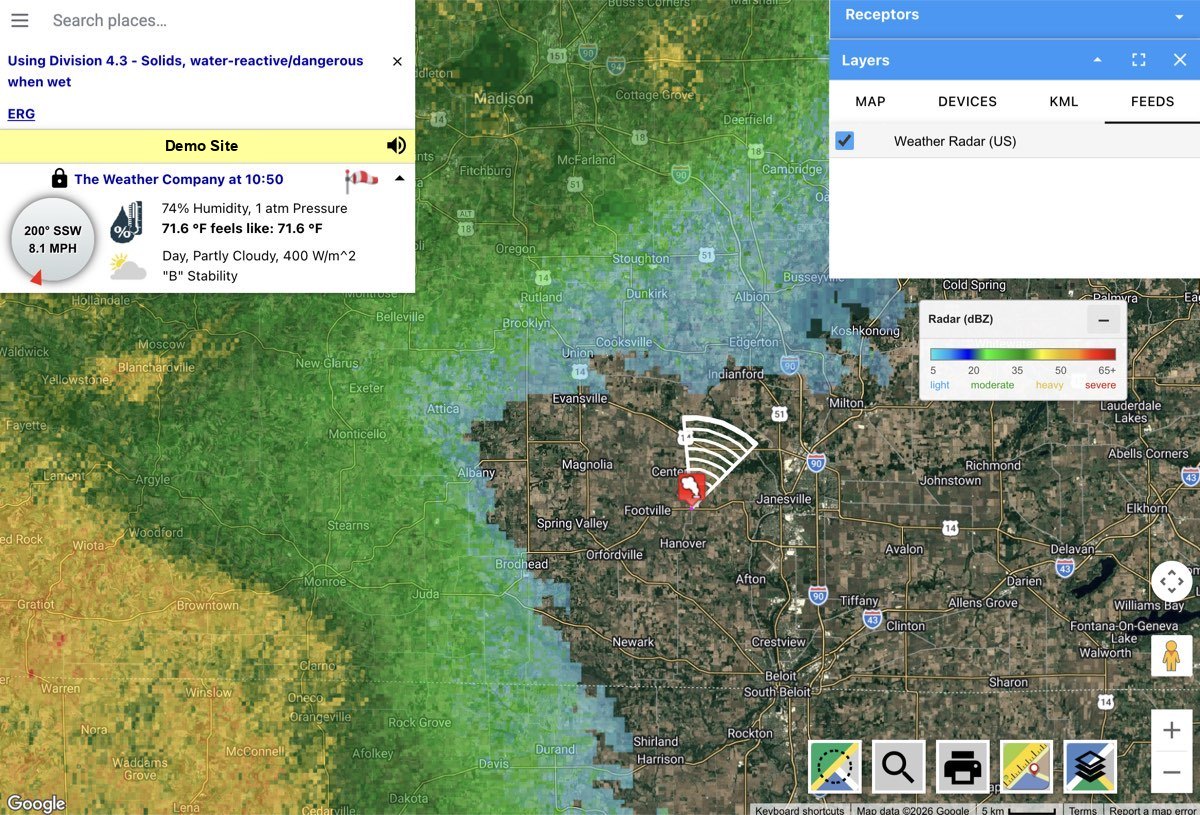
- Tier II, RMP, Seveso and E2 inventories imported; emission sources, hazard areas, safe rooms, shelters, muster points and receptors on the site map; KML/KMZ, WMS overlays and your own imagery; zones with per-zone chemicals; predefined scenarios per zone; live feeds for weather radar, alerts, air quality, floods, outages and AIS vessel positions.
- Sites and users
- Organizations with many sites under one administration; the multi-site readiness board; site sync; roles from responder to site and organization administrator; membership drives who receives alarm emails.
- Personnel
- Status board with PAR roll calls for the site and for an incident, roster with QR join, GPS while responding, head counting with geofences, Command Board for the plant fire brigade, incident chat with @mentions and push.
- Training
- Story missions, Basics lessons and incident-command lessons for the brigade and the control room, played with the real tools on a private exercise incident; guided or tested with a qualification record; the chief's team matrix and curricula.
- Reports and exports
- PDF and Word reports with the map, zones, impacted places, infiltration analysis and population; quick impacted report and source-locator report; KML/KMZ, Shapefile, CAP; history exports; weather briefing.
- Runs on
- Any modern browser on the control-room PC, the wall display, tablets and phones; iOS and Android apps; wallboard mode for the status board and readiness board. English, French, Spanish, German and Chinese, including the help; metric or US units per user.
- Delivery and security
- Cloud service at ceres.vlahi.com, or a private deployment including a configuration for China with local map tiles and weather sources; phone and email support; a hardware compatibility review before start-up. Email and password with two-factor authentication, or Microsoft and Google accounts; brute-force protection; roles per site; share links limited to what you publish.
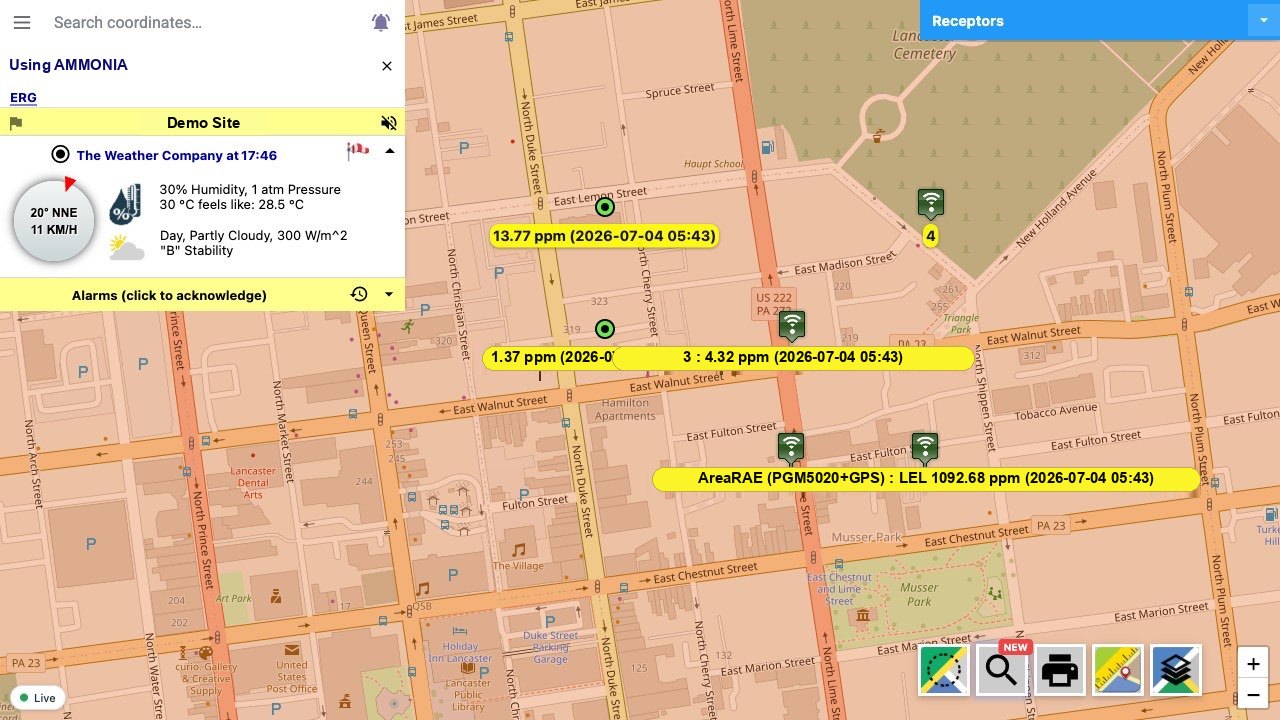
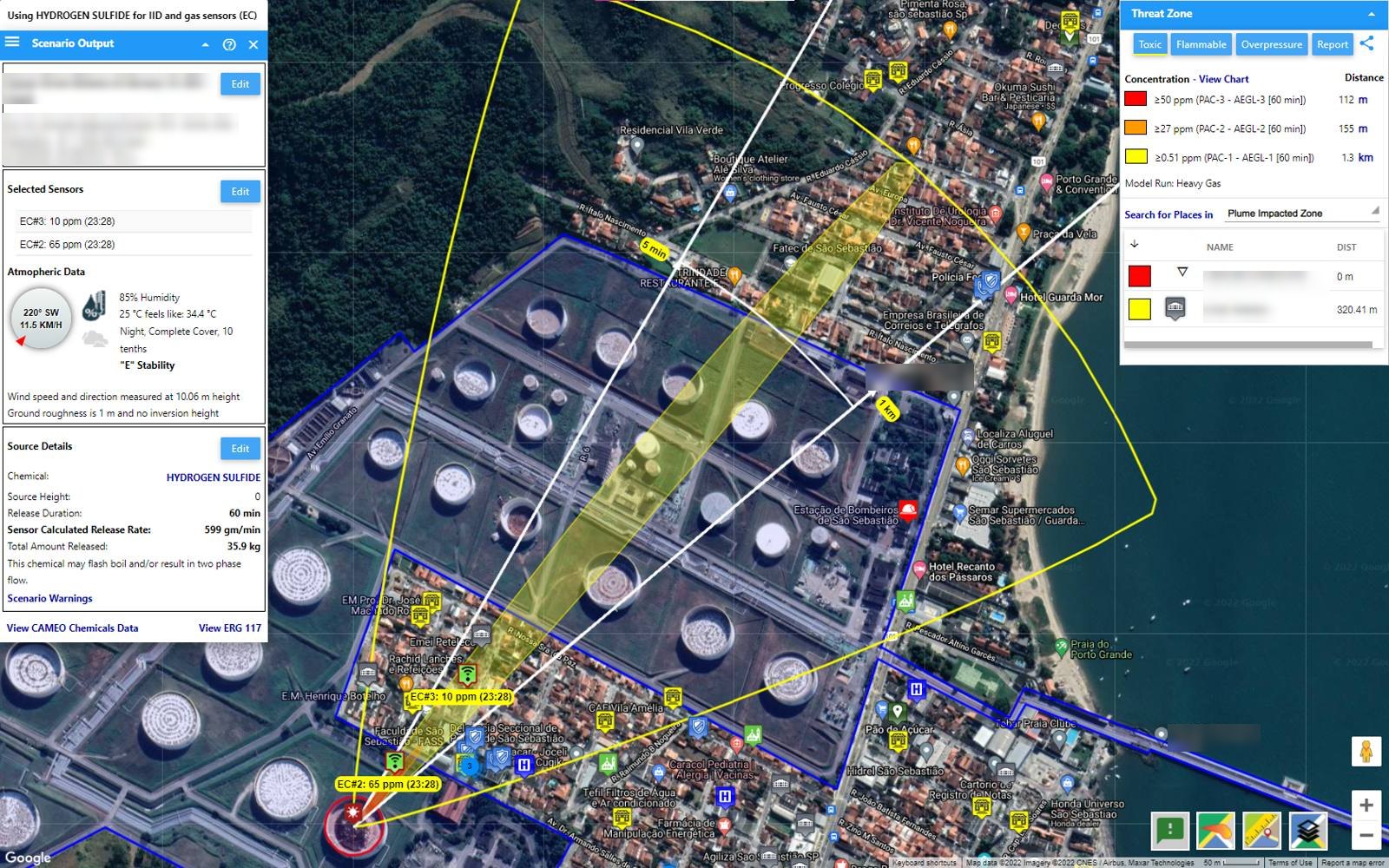
Products
Three products and the free version. Each product includes the one before it, licensed per site. No prices here: write to sales@vlahi.com for a quote. A plant usually starts with Live Facility.
CERES Free
ALOHA direct, puddle, tank and gas-pipe sources, the full ERG event set, the map, scenario history and the free tools.
Vulnerability and Risk
Adds the Pro models and calculators (fire, blast, boilover, battery, radiological), vulnerability zones, threat at a point for many receptors, population impact, predefined scenarios, RMP, E2 and Seveso support, advanced reports.
HAZMAT Team
Everything in Vulnerability and Risk, for the whole team on one shared site: detectors and met stations, live weather and traffic, Tier II, RMP, Seveso and E2 imports, sensor-driven plume and locate source, alerts, team tracking, offline mode, history.
Live Facility
Everything in HAZMAT Team, plus SCICHEM puff dispersion for wind shifts, calm winds and complex terrain, eight-hour runs, soot and deposition, wide-area transport, head counting, voice and SMS notification, continuous monitoring of your detectors and weather.
To the people who keep the plant safe
The best day at a plant is the one nobody outside it hears about. That takes a control room that trusts its alarms, a brigade that knows every unit, and neighbors who are told first. CERES Live Facility is built with plants that do this well, so they can keep doing it and show it. Doing a great job and keeping everyone safe is your work. Making it visible is ours.
Thank you for the days nobody hears about. Vlahi Systems