 CERESChemical Emergency Response E-Service
Capability sheet
80 tools, grouped by the question they answer.
The Tools workspace opens from the map or on its own, attaches to the incident so every result lands in the record, and runs on a phone at the scene. Most tools are free with any CERES account. Pro tools are marked. Each one names the standard or study behind its numbers. A Training module plays missions and lessons with the same tools.
- Nine groups that follow the incident: identify, predict, mitigate, protect, treat, fight, command, plan, look up
- Search that forgives typos, windows you can park side by side, read-only share links for any result
- A how-to tour on every tool, most with a practice mode, help in five languages, your agency's equipment pinned where it matters
Identify and react
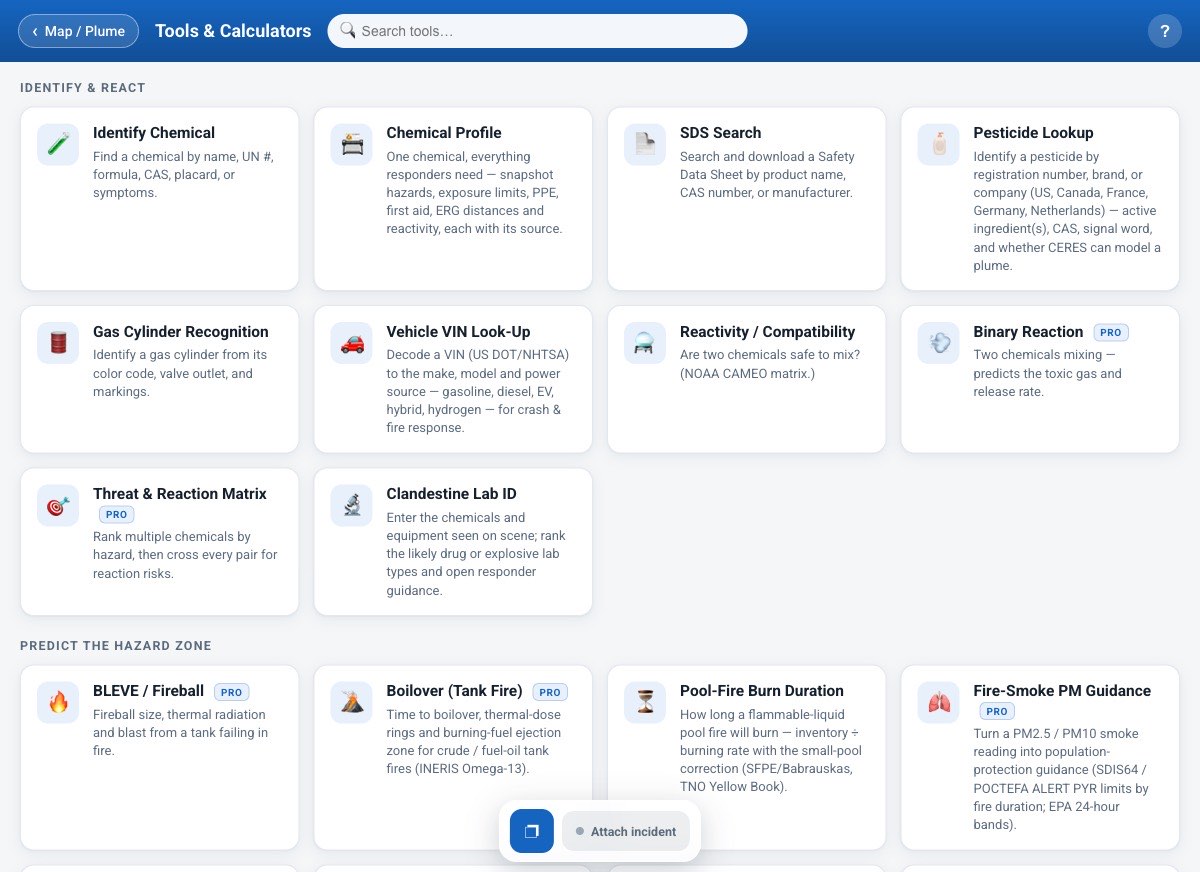
What is it, what will it do, and what happens if it meets something else.
10 tools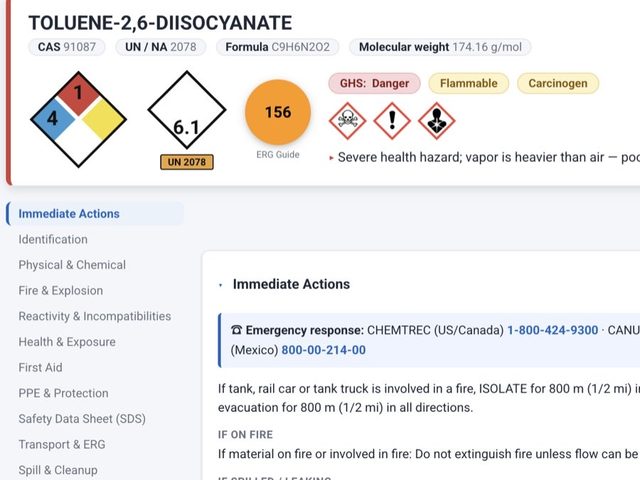
- Identify ChemicalFind a chemical by name, UN number, formula, CAS, placard or symptoms.
- Chemical ProfileOne chemical, everything responders need: hazards, exposure limits, PPE, first aid, ERG distances and reactivity, each with its source.NIOSH, CAMEO, DOT, OSHA, EPA
- SDS SearchSearch and download a Safety Data Sheet by product name, CAS number or manufacturer.
- Pesticide LookupIdentify a pesticide by registration number, brand or company in the US, Canada, France, Germany and the Netherlands, with the active ingredients and whether CERES can model a plume.
- Gas Cylinder RecognitionIdentify a cylinder from its color code, valve outlet and markings.CGA
- Vehicle VIN Look-UpDecode a VIN to make, model and power source: gasoline, diesel, EV, hybrid, hydrogen.US DOT NHTSA
- Reactivity and CompatibilityAre two chemicals safe to mix?NOAA CAMEO reactivity matrix
- Binary Reaction PROTwo chemicals mixing: the toxic gas produced and its release rate.
- Threat and Reaction Matrix PRORank several chemicals by hazard, then cross every pair for reaction risks.
- Clandestine Lab IDEnter the chemicals and equipment seen on scene; rank the likely drug or explosive lab types and open responder guidance.
Predict the hazard zone
How far, how hot, how hard and how long, for fire, blast, vapor and radiation.
20 tools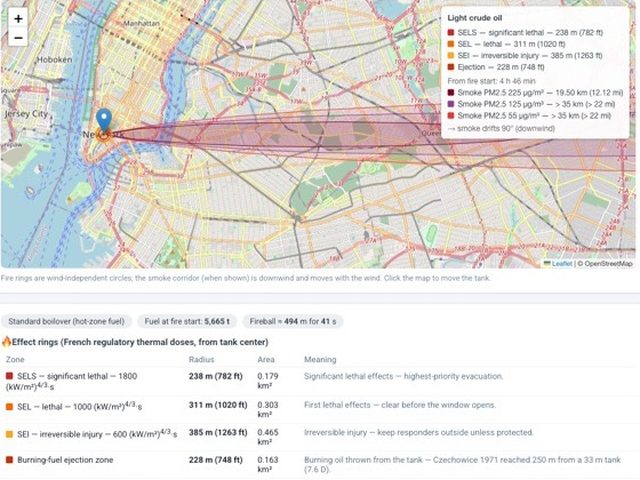
- BLEVE / Fireball PROFireball size, thermal radiation and blast from a tank failing in fire, with time to failure and cooling-water guidance.
- Boilover (Tank Fire) PROTime to boilover, thermal-dose rings and the burning-fuel ejection zone for crude and fuel-oil tank fires.INERIS Omega-13
- Pool-Fire Burn DurationHow long a flammable-liquid pool fire burns, from inventory and burning rate with the small-pool correction.SFPE, Babrauskas, TNO Yellow Book
- Fire-Smoke PM Guidance PROTurn a PM2.5 or PM10 reading into population-protection guidance by fire duration.SDIS 64, POCTEFA ALERT PYR, EPA bands
- Products of Combustion PROWhat is in the smoke when a material burns: toxic products with quantities, AEGL-ranked hazards and a screening downwind reach.
- BESS Battery Fire PRORadiant heat-flux rings from a lithium-ion energy-storage fire, scaled from the stored energy.
- EV Fire Thermal ModelSafe separation distances and heat flux from a burning electric vehicle, from its peak heat release rate.UL FSRI
- Gas Leak and Jet Fire PRORelease rate from a pressurized vessel and the jet-fire reach if ignited.
- Pool-Fire Radiation / PPE PRORadiant heat from a pool fire; time to PPE failure and skin burns at each distance.
- IED / BLEVE StandoffBomb standoff cards, LPG fireball and ERG propane BLEVE distances.DHS-ATF, NGIC, ERG
- Vapor Cloud Explosion PROOverpressure rings at 8, 3.5 and 1 psi when a flammable cloud ignites in a congested area.Baker-Strehlow-Tang
- Fireworks Explosion MixTotal TNT equivalent and blast standoff for a mixed fireworks load by UN hazard division.
- Ammunition Danger AreasFragment danger areas for ammunition or bulk explosives by all-up weight, and quantity-distance storage separations.UN SaferGuard, IATG, Hopkinson-Cranz
- Li-Ion Battery Gas Vent PROToxic and flammable gas in a room, vehicle or container when a lithium-ion battery vents: HF and CO against AEGL and IDLH, percent LFL, and what the meters miss; outdoor ERG-style distances.
- Solution Evaporation PROInitial evaporation rate from an aqueous spill, ready to feed ALOHA.
- Liquid Spill Evaporation PROQuick evaporation rate and time to dry for a spilled liquid without weather data.Illinois EPA screening
- Cryogen O₂ DisplacementOxygen left in a confined space after a cryogenic or gas release: no-entry verdict, maximum safe quantity, time to hazard.EIGA, OSHA
- Spill to Water PARTLY PROFlammable vapor down the storm drains, river dilution and travel time, float, sink, dissolve or evaporate, intake closure against benchmarks.SEBC, EPA
- Nuclear Detonation PROBlast, thermal, radiation and flash zones from yield and height of burst.Glasstone-Dolan
- Dirty Bomb / RDD PROBlast zone and the downwind dose and contamination plume.HotSpot method
Size up and mitigate the spill
How much is out, what container it came from, and what it takes to make it safe.
8 tools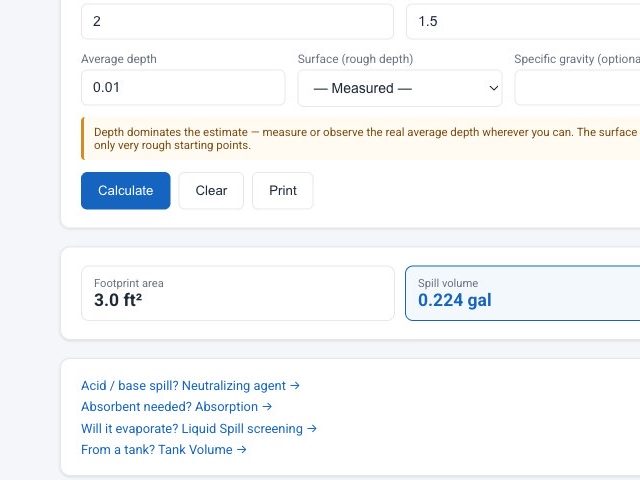
- Tank VolumeCapacity by shape and dimensions, and the liquid volume from a level, including a horizontal tank on its side.
- Spill VolumeSpilled volume and mass from the puddle footprint and average depth; hands off to neutralization, absorbent and evaporation.
- Transport ContainersRail car, cargo tank, ISO tank and barge presets with standard capacity and geometry to pre-fill a tank scenario.DOT-111, MC-331, T11 and more
- Dilution CalculatorWater to render a spill safe by chemical or by pH: water required, total volume to contain, feasibility.
- NeutralizationNeutralizing-agent mass for an acid or base spill by chemical equivalents, with exotherm, gas and HF safety notes.
- AbsorptionHow much sorbent to bring for a liquid spill, by sorbent type, with the bag count.
- Decon Runoff and ContainmentHow much contaminated water decon makes, whether the berm or pool holds it, plus drums, totes and absorbent.
- Ventilation CalculatorTime to clear an indoor space to a safe level, and the air changes required.
Protect the entry team
The suit, the respirator, the meter and the clock.
5 tools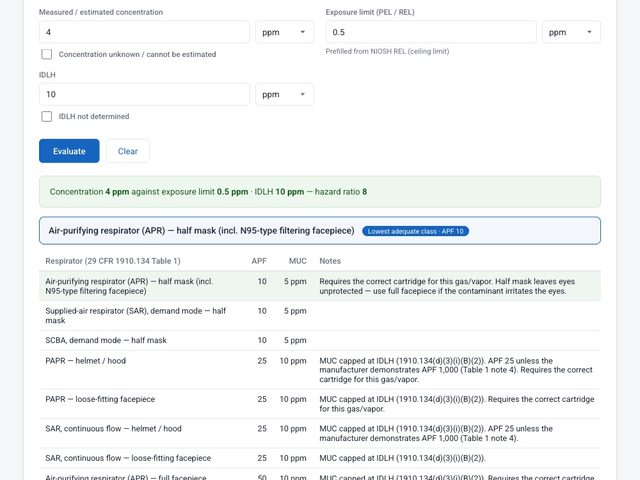
- CPC BreakthroughChemical-suit and glove breakthrough times by chemical.ASTM F739
- Respiratory ProtectionThe legal respirator class, and SCBA air time at your work rate.OSHA 1910.134
- APR Canister and LifeWill a canister or cartridge protect against a chemical, and for how many minutes.
- Detector CorrectionPID and LEL correction factors and the true concentration from a meter reading, by chemical and detector.
- Heat Stress and Stay TimeWork and rest cycle, fluids and monitoring cadence in protective clothing, from temperature, humidity and work rate.
Casualties and medical
From the first symptom to the antidote, and from a mass-casualty sort to a radiation dose.
12 tools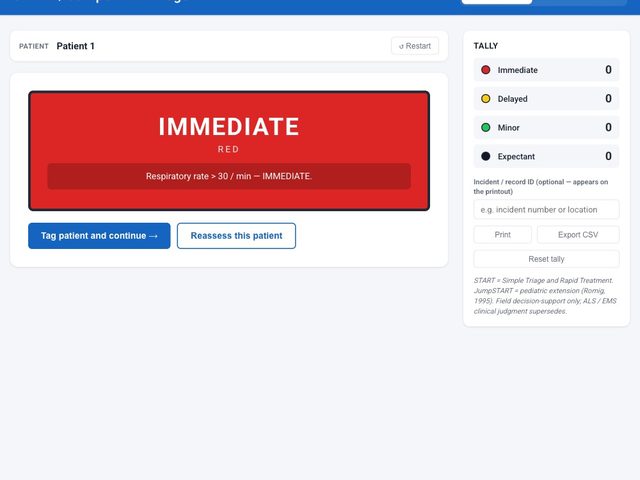
- ToxidromeThe likely toxic syndrome and antidote from the patient's signs.
- Antidote DosingWeight-based mg and mL dosing for hazmat and CBRN antidotes; fixed-dose products return their regimen.CHEMM, REMM, FDA
- Bio/CW AgentsReference cards for biological, toxin and chemical-warfare agents: incubation, signs, treatment, decon and isolation.
- START / JumpSTART TriageMass-casualty triage by respiration, perfusion and mental status, adult and pediatric.
- SALT TriageSort, assess, lifesaving interventions: the US all-hazards method.
- Burn TriageBurned surface area, the fluid-resuscitation starting rate and burn-center referral criteria.Rule of Nines, Lund-Browder, ABA, Parkland
- Decontamination AdvisorIs wet decon worth it? Volatility and urgency check, then disrobe and wet or dry decon steps.CHEMM, PRISM, IOR
- Radiation CalculatorUnit conversion, gamma dose rate, stay time and fallout decay.
- Radiation Dose from VomitingThe dose a casualty received from the time to onset of vomiting.AFRRI BAT, Demidenko
- ARS ManagementWhole-body dose to the expected acute radiation syndrome, treatment bundle and destination.REMM, Waselenko
- Radiation CountermeasuresReference doses for potassium iodide, Prussian blue, DTPA and the myeloid cytokines.FDA, REMM
- Scarce-Resource Radiation TriageTriage category and cytokine recommendation after a detonation when resources are overwhelmed.REMM
Fireground operations
Water, foam and pressure.
4 tools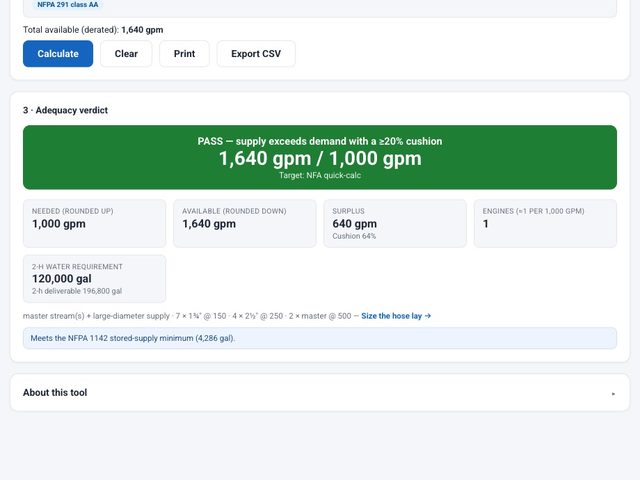
- Foam ApplicationFoam supply: flow, concentrate and water.NFPA 11
- Hose Friction LossFriction loss and the required pump discharge pressure for a hose lay.NFPA, IFSTA
- Drafting / Suction LiftMaximum safe suction lift from static water by altitude, water temperature and cavitation.
- Fire Flow and Water SupplyHow much water the fire needs, what hydrants and tanker shuttles deliver, and whether it is enough.NFA, Iowa, ISO, NFPA 1142
Incident management
The command post, the people and the paperwork.
13 tools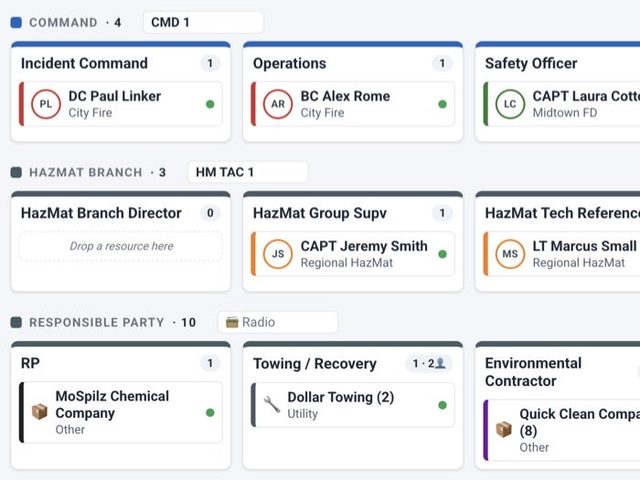
- Incident Weather PROWeather read as a hazmat size-up: where a release goes and the sector it can reach, stability class and ERG day or night, the changes in the operational period, heat, cold, lightning and rain, plus a briefing to paste or export.
- Coordinate ConverterAny position notation in, all of them out: decimal degrees, DMS, UTM, MGRS, Plus Code, geohash or a map link. Works offline.
- Incident NotificationNotify the call-down list and partner agencies by email and SMS with location, summary, POC, chemical and plume links and photos, from templates, with a per-recipient log.
- My Status TEAMSet your response status in one tap; GPS shares only while responding; every change logs to the ICS 214.
- Team / Site Status Board TEAMLive roster with per-status counts, teams, officer overrides, PAR roll calls and responder-emergency alarms; wallboard mode.
- Multi-Site Readiness TEAMPer-site status counts for every site you may see; emergencies and open PARs badge each site.
- Incident ManagerRun an incident: header, tasks, live activity log, and the ICS 202, 203, 204, 208 and 214 forms filled from the record, to Word or PDF.FEMA ICS 202, 203, 204, 208, 214
- Incident LogThe live log alone, filtered by responder, ICS role, time and tag.
- Cost ReviewWhat a reviewer would question on an incident's costs, and the published rule behind each item.
- Command BoardDigital command and accountability board: drag crews onto assignments, one-tap PAR, air and work-cycle timers, MAYDAY, automatic ICS 214 log, ICS 201 and 211 exports. Works offline.
- Rehab TrackerCheck crews in, capture vitals and the medical screening, time the rest cycle, log fluids, release or transport.NFPA 1584
- Incident Sketch and Mark-UpSketch the scene over a graph board, aircraft, the cargo-tank and rail-car family, a photo or the live map; stamp NIMS symbols; print or post to the board.
- Open Action TrackerThe command-post whiteboard for tasks below objectives: POC, priority, deadlines, live sharing, printed as an ICS 233.FEMA ICS 233
Planning and compliance
The inventory, the worst case and the relief valve.
3 tools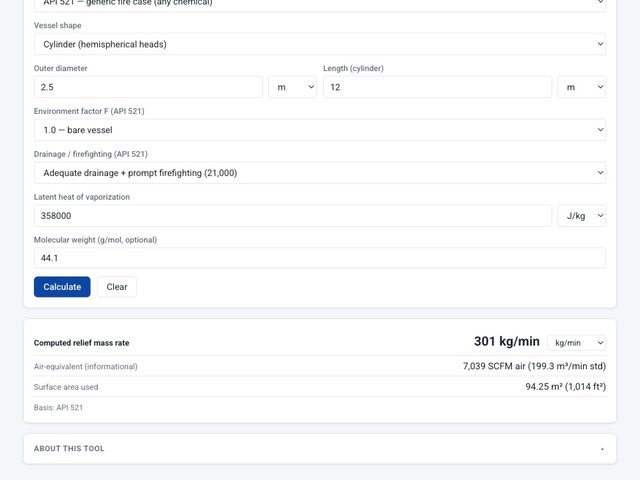
- Tier II Summary Reports PRORoll up the EPCRA Tier II inventory across the site: totals, EHS and CSV export.
- Worst-Case Auto-Analysis PROBatch-model the worst-case release for every Tier II or RMP facility chemical: distances, population, stacked footprints, influencing facilities.
- PRV Sizing PROSize a relief valve for fire engulfment.NFPA 58, API 521
Training
Learn the tools between calls, and prove it.
1 module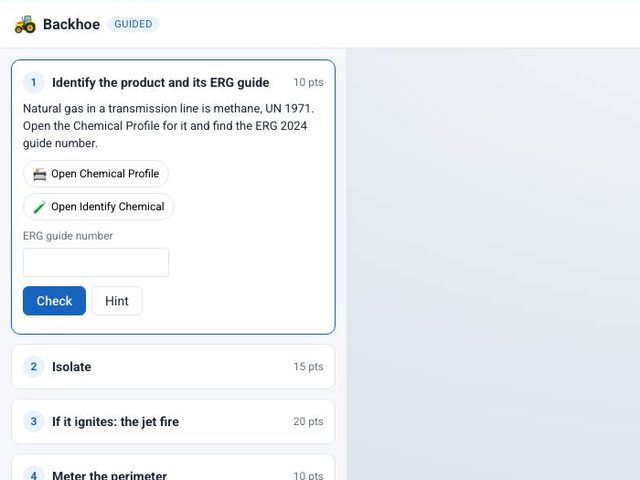
- TrainingFour story missions played with the real tools on a private exercise incident, so nobody is paged: guided mode teaches with hints and tours, tested mode records a qualification with an expiry. Eleven Basics lessons cover the workspace, chemicals, levels of concern, weather and running models, and three incident-command lessons cover taking command, the roster and the record, and accountability. The chief's Team tab holds the matrix, curricula and assignments.HSEEP-style ratings, after-action review
Reference and administration
The phone book, the links, the equipment and the simulators for drills.
5 tools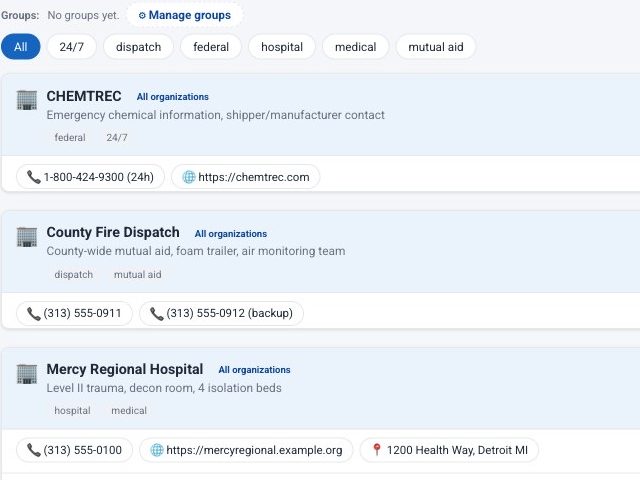
- Contacts and ResourcesThe team's response phone book: dispatch, hospitals, CHEMTREC and key people, kept current by your administrators.
- Useful LinksCERES references and manuals, plus the links your administrators add.
- Agency EquipmentMark the fans, gas meters, PPE and cartridges your agency carries; they are pinned and highlighted across the tools.
- Rate SchedulesThe published equipment rates your incident bills are priced from; load the FEMA schedule and publish newer editions.
- Sensor and Device SimulatorCreate and drive simulated detectors from manufacturer presets, a custom build or a clone of a live device, for drills and commissioning. Site administrators; integration simulators for Modbus, PI Web API, Blackline Live and Safety Suite are available to application administrators.
Free, Pro and Team. Tools without a mark are included with every CERES account, including the free version. PRO tools come with any of the three paid products; the modeling tools among them also need the scenario-runner role. TEAM tools also come with any paid product and are open to every member of the site, whatever their role. Locked cards show a padlock, never an error.