 CERESChemical Emergency Response E-Service
Product sheets
Built with the people who go toward it.
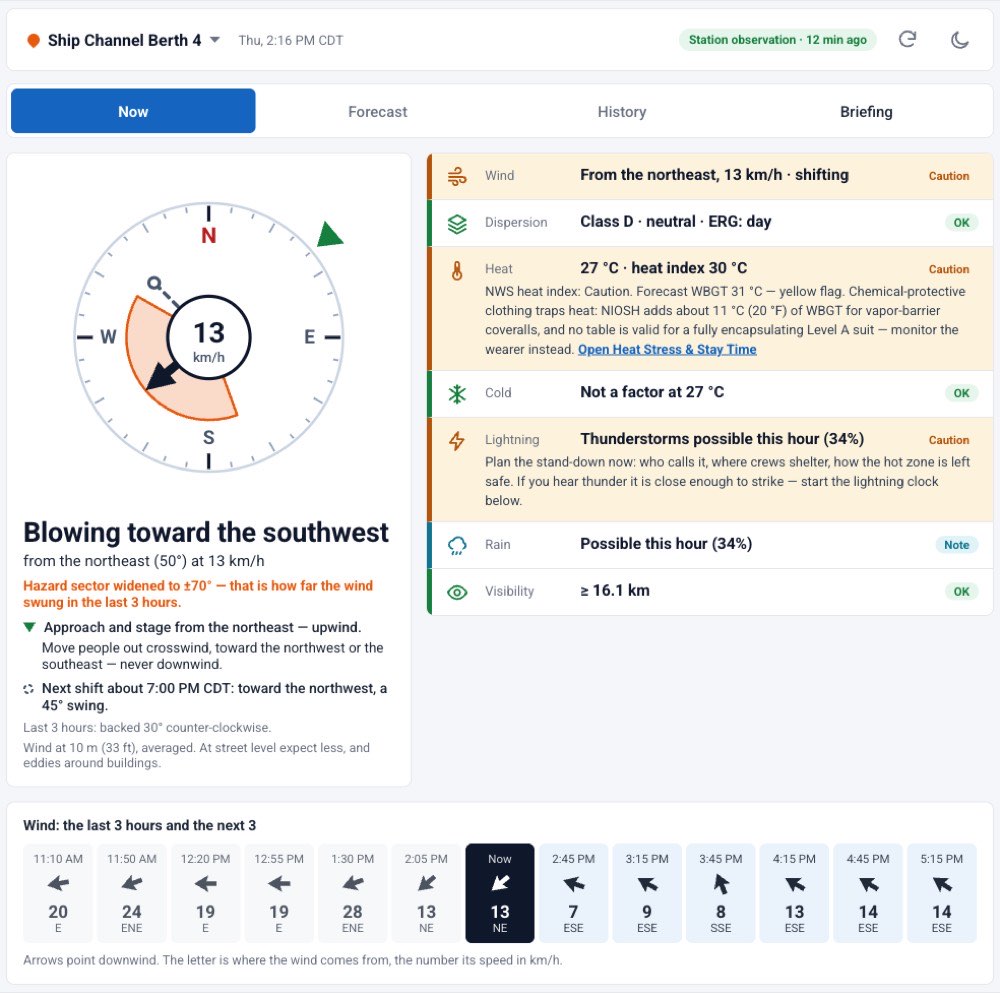
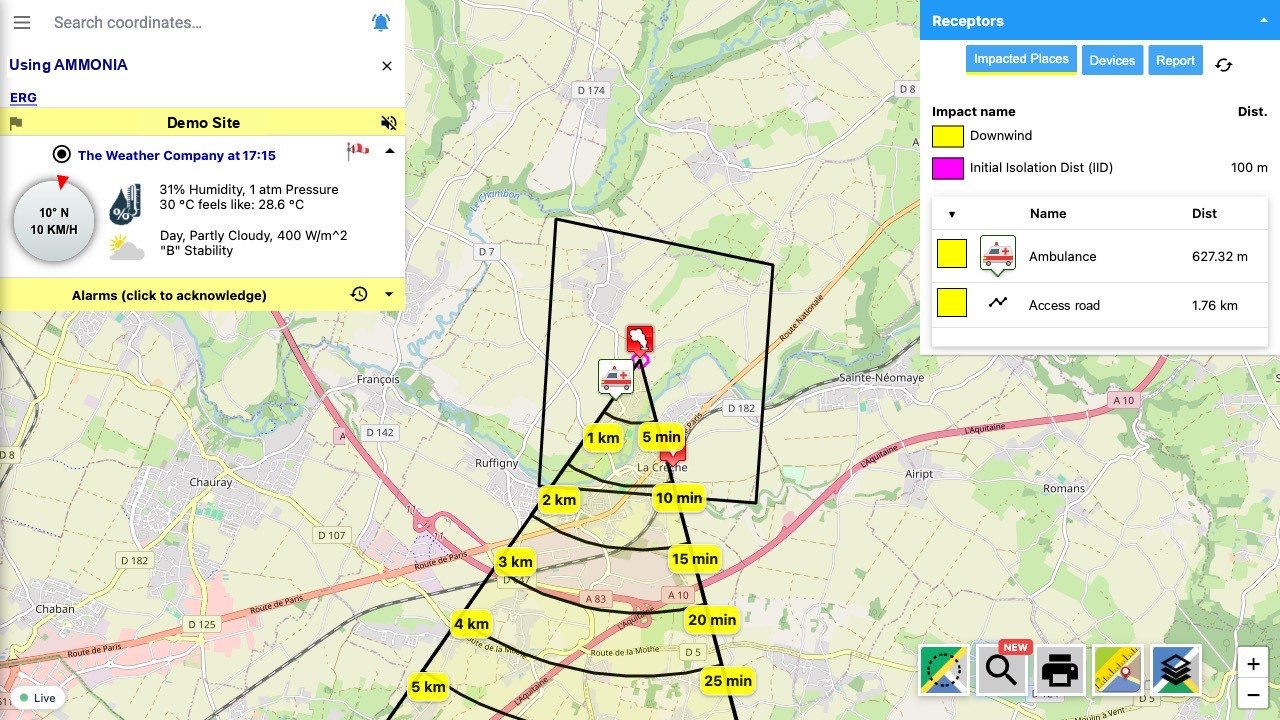
CERES puts the EPA and NOAA hazard models, the 2024 Emergency Response Guidebook, live gas detectors and weather, incident command and 80 responder tools on one map that runs in any browser. It is built with fire departments, hazmat teams and chemical plants in North America, Europe and Asia, and shaped by what they asked for on scene. Two sheets say what it does for a team and for a plant. Two more list what is under the hood.
- For hazmat teams: the zone on the map before the first unit is on scene, and every crew member accounted for
- For plants: alarms that mean something, the plume from your own detectors, and the neighbors told first
- For both: the same picture on the truck, in the command post and in the control room, and a record the review can trust
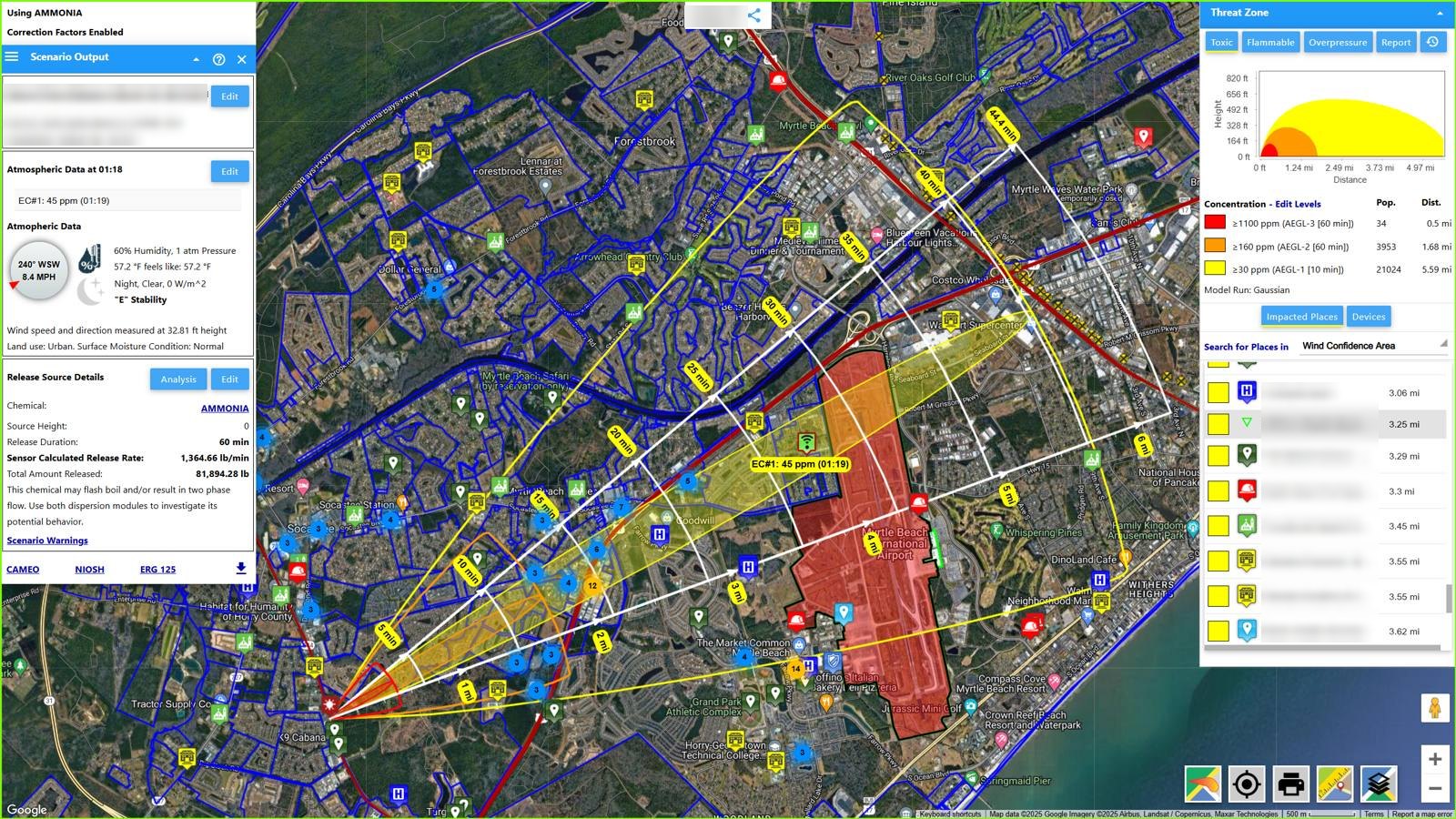
Four sheets, two audiences
Two product sheets are written from the responder's and the plant's side. Two capability sheets list what is under the hood. The product sheets print on three pages each, the catalogs on four and five.
CERES for hazmat teams
Six moments of a call, from the placard read at a hundred meters to the report and the drill, written from the responder's side, with what CERES does in each.
Open the hazmat teams sheetCERES Live Facility
Six moments at a plant, from an ordinary shift to the review: run the response well, keep your people and your neighbors safe, and be able to show it.
Open the facilities sheetHazard models
Every dispersion, fire, explosion and radiological model CERES runs, the published basis of each, the inputs it needs and what it draws on the map.
Open the hazard models sheetTools and calculators
80 tools in nine groups, from placard to triage to foam supply, each with the standard behind it. Most are free with any CERES account.
Open the tools catalog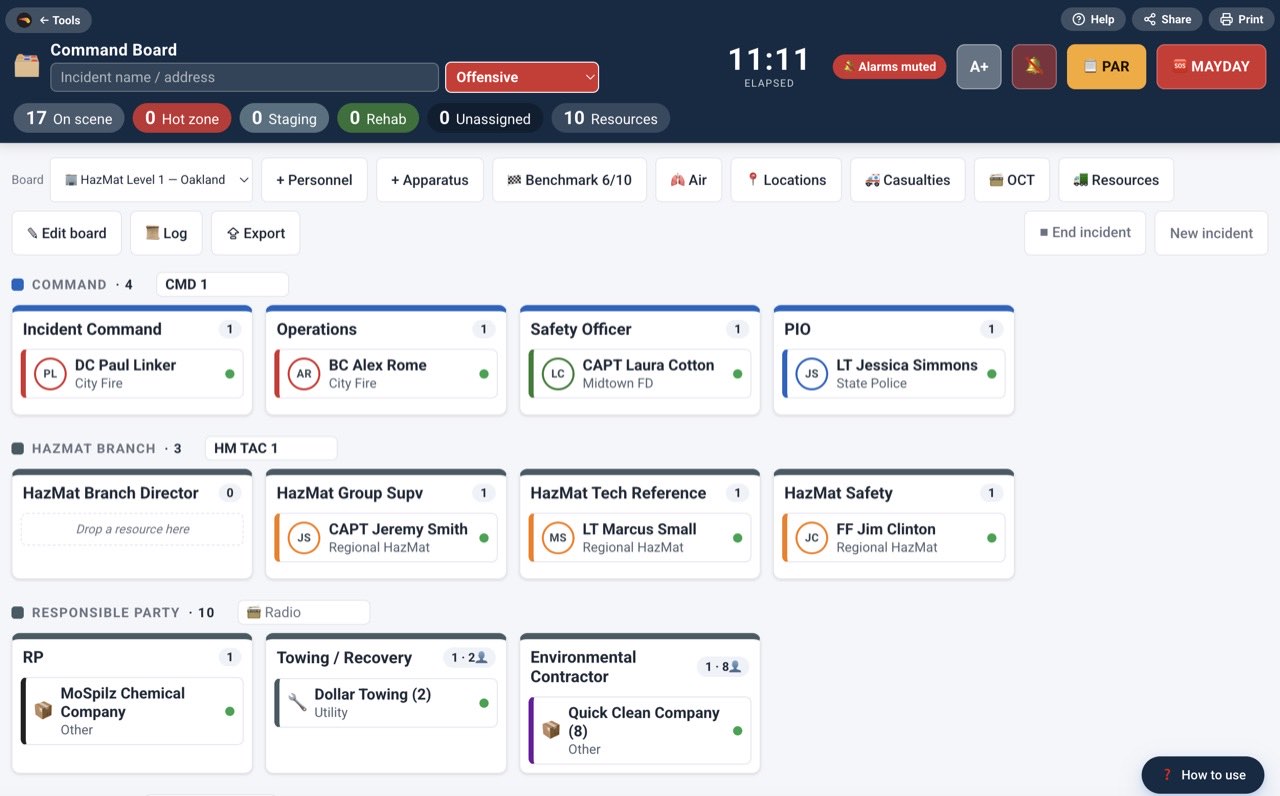
Under the hood, briefly
The full model list and the 80-tool catalog have their own sheets. This is the short version.
- Hazard models
- ALOHA 5.4 source terms and dispersion from the US EPA and NOAA, run natively; Pro models for fire, explosion, boilover, battery fires and radiological releases; SCICHEM complex terrain with Live Facility; each one documented with its basis.
- Guidance built in
- ERG 2024; NIOSH Pocket Guide; CAMEO Chemicals; CHEMM and REMM; FEMA ICS 201, 202, 203, 204, 208, 211, 214 and 233; NFPA 1584 rehab; DHS-ATF standoff cards; 1,300+ chemicals with every property labeled with its source.
- Tools
- 80 tools and calculators in nine groups that follow the incident, attached to it so every result lands in the record. Most are free. Each has a how-to tour, most with a practice mode.
- Live data
- Gas detectors and met stations over Modbus, OPC, PI, MQTT, serial and the Blackline, Honeywell/RAE and Industrial Scientific clouds; The Weather Company; radar, NWS alerts, air quality, wildfire, flood, earthquake, outage and AIS vessel feeds.
- People
- My Status, team status board, PAR roll calls, roster with QR join and a phone-only Responder role, GPS only while responding, Command Board accountability, responder emergency alarm, incident chat with @mentions and push.
- Training
- Four story missions on a private exercise incident with the real tools, guided to learn and tested to qualify; eleven Basics lessons on the tools and models; three incident-command lessons; the chief's team matrix with curricula and assignments.
- Languages and units
- English, French, Spanish, German and Chinese, including the help; metric or US units per user.
- Runs on, delivery
- Any modern browser on Windows, macOS, Linux, iOS and Android, nothing to install; iOS and Android apps; the Command Board keeps working offline. Cloud service at ceres.vlahi.com or a private deployment; two-factor sign-in, or Microsoft and Google accounts.
Products
Three products and the free version. Each product includes the one before it, licensed per site. No prices here: write to sales@vlahi.com for a quote.
CERES Free
ALOHA direct, puddle, tank and gas-pipe sources, the full ERG event set, the map, scenario history and the free tools.
Vulnerability and Risk
Adds the Pro models and calculators (fire, blast, boilover, battery, radiological), vulnerability zones, threat at a point for many receptors, population impact, predefined scenarios, RMP, E2 and Seveso support, advanced reports.
HAZMAT Team
Everything in Vulnerability and Risk, for the whole team on one shared site: detectors and met stations, live weather and traffic, Tier II, RMP, Seveso and E2 imports, sensor-driven plume and locate source, alerts, team tracking, offline mode, history.
Live Facility
Everything in HAZMAT Team, plus SCICHEM puff dispersion for wind shifts, calm winds and complex terrain, eight-hour runs, soot and deposition, wide-area transport, head counting, voice and SMS notification, continuous monitoring of your detectors and weather.
To the people who go toward it
The measure of CERES was never the feature list. It is whether the zone was right, whether the crew came out, and whether the report told the truth. That part is your work. Ours is to make sure nothing in the software stands between you and it.
Thank you for going toward it. Vlahi Systems